

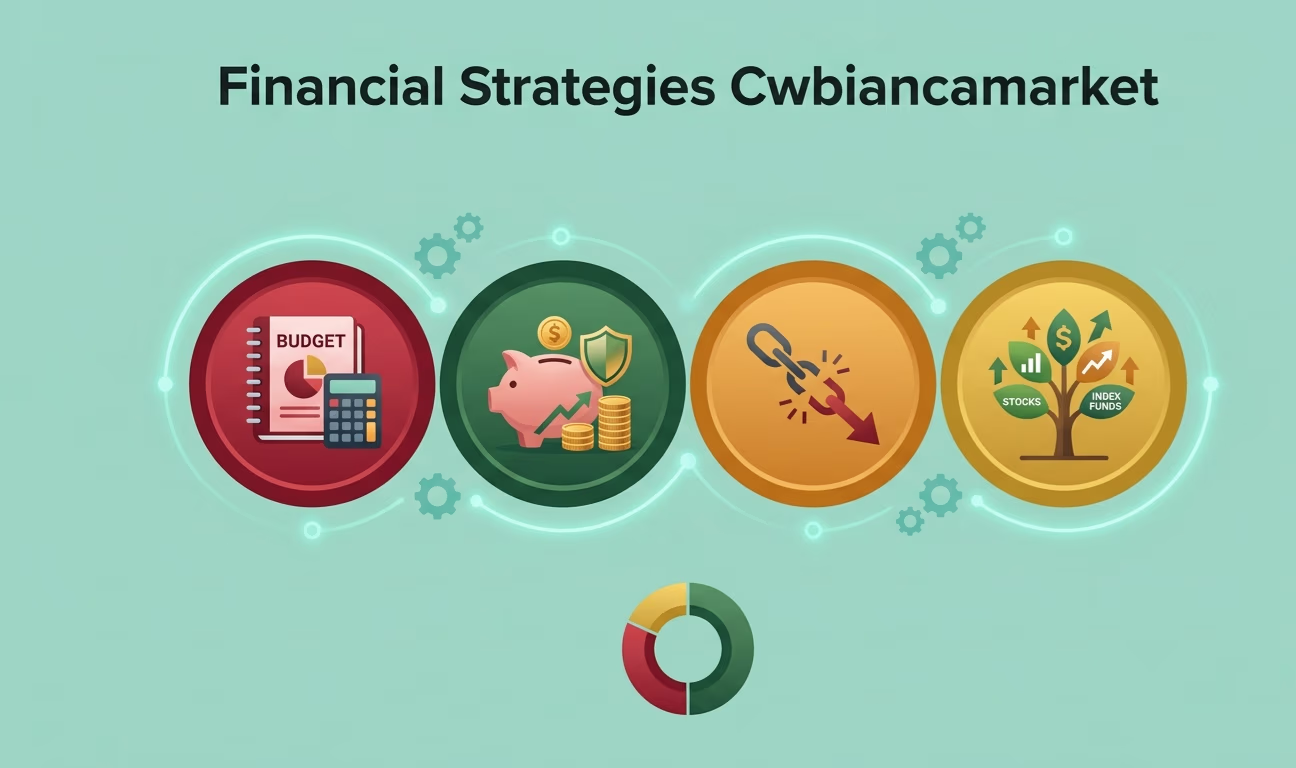
Understanding the Financial tips Cwbiancamarket
Personal finance is a critical aspect of achieving financial security and stability. It encompasses the processes of budgeting, saving, and investing, which are essential for maintaining healthy financial habits. To begin navigating the intricate world of personal finance, one must first comprehend the dynamics between income and expenses. Understanding how much one earns versus how much one spends is crucial for establishing a solid financial foundation.
Budgeting is the first step in managing personal finances effectively. It involves creating a plan for how to allocate income towards various expenses, including fixed costs such as rent and groceries, and variable expenses like entertainment. A carefully crafted budget allows individuals to avoid unnecessary debt and make informed choices about their spending habits. Utilizing financial tips from cwbiancamarket can further enhance the budgeting process, ensuring that individuals are aligned with their financial ambitions.
Saving is another critical element of personal financial tips cwbiancamarket. Establishing an emergency fund, typically amounting to three to six months’ worth of living expenses, serves as a safety net during unforeseen circumstances. This proactive measure empowers individuals to manage unexpected financial challenges without resorting to credit. Furthermore, developing a saving routine, whether through automatic transfers to savings accounts or dedicated savings plans, can foster a culture of saving that will benefit one’s long-term financial health.
Finally, investing is often seen as a method for growing wealth over time. By putting money into assets that have the potential to appreciate in value, individuals can increase their financial security. Knowledge of investment vehicles, such as stocks, bonds, or mutual funds, is essential. Utilizing financial tips from cwbiancamarket aids in comprehending risk tolerance and the potential returns of different investment strategies.
In conclusion, grasping the basics of personal finance—budgeting, saving, and investing—is vital for achieving financial literacy and stability. By focusing on these foundational concepts, individuals can set realistic financial goals and make informed decisions that will positively impact their future.

Smart Budgeting Techniques
Effective budgeting is fundamental in managing personal finances, ensuring that individuals not only meet their essential needs but also allocate funds towards savings and investments. Implementing smart budgeting techniques can help readers navigate their financial landscape more effectively. One popular method is the 50/30/20 rule, which divides after-tax income into three key categories: 50% for needs, 30% for wants, and 20% for savings and debt repayments. This rule allows for a balanced approach, fostering a disciplined spending habit while also preparing for future financial stability.
Another valuable technique is zero-based budgeting, which emphasizes accountability for every dollar spent by requiring individuals to assign every dollar of income towards specific expenses or savings. This method can result in a clearer understanding of financial priorities and can help eliminate unnecessary expenditures. By utilizing zero-based budgeting, individuals may find ways to cut costs and reallocate their funds towards more beneficial areas.
The importance of tracking expenses cannot be overstated in discussing budgeting strategies. Regularly monitoring spending habits enables individuals to identify patterns and adjust accordingly. This practice not only aids in adhering to budgeting goals but also provides insights into areas where adjustments might be necessary in response to fluctuating incomes or unexpected expenses. Practical tips for creating a personalized budget include utilizing budgeting apps, setting attainable financial goals, and revisiting the budget periodically to ensure it aligns with ever-changing financial circumstances.
In conclusion, by employing these smart budgeting techniques, individuals can improve their financial literacy and achieve their economic objectives more effectively. Embracing methods like the 50/30/20 rule, zero-based budgeting, and diligent expense tracking can create a solid foundation for sustainable financial management and lifelong wealth building.
Investing for the Future
When it comes to planning for financial stability, one of the most important strategies is investing. Numerous investment vehicles are available today, including stocks, bonds, and real estate. Understanding these options is essential to making informed choices. Stocks represent ownership in a company and can offer significant growth potential; however, they typically come with higher volatility compared to other forms of investment. Bonds are generally viewed as a more stable option, providing fixed interest returns over a specific period. On the other hand, real estate can serve as both a tangible asset and a potential source of rental income.
Diversification is a crucial element of any investment strategy. By distributing investments across various asset classes—such as stocks, bonds, and real estate—investors can mitigate risks associated with market fluctuations. Understanding risk management basics is vital; not all investments perform similarly during economic downturns. Therefore, maintaining a balanced portfolio tailored to individual risk tolerance and investment timeframe is essential.
Investing for the future should also involve a focus on retirement savings. Utilizing retirement accounts such as IRAs and 401(k)s can provide tax advantages that enhance long-term growth. Basic investment concepts such as compound interest—where earnings generate additional earnings over time—and dollar-cost averaging—investing a fixed amount regularly, regardless of market conditions—are fundamental to successful investing.
By grasping these essential investment strategies and understanding the importance of a diversified portfolio, individuals can make informed decisions that align with their financial goals. In the realm of financial tips, cwbiancamarket advocates for an informed approach that prioritizes education on various investment avenues.

Avoiding Common Financial Pitfalls
Managing personal finances can be challenging, and many individuals inadvertently fall into common financial pitfalls that can adversely affect their financial stability. Overspending is a primary mistake; engaging in impulse purchases or mismanaging budgets can lead to not only depleted savings but also the accumulation of debt. It is crucial to develop a comprehensive budget and stick to it, which can provide a realistic overview of monthly expenses, helping to curb unnecessary spending.
Another critical financial pitfall is accumulating debt, particularly consumer debt from credit cards or loans. High-interest rates can make repaying debt burdensome, leading to a cycle of financial strain. To combat this issue, individuals should prioritize paying off high-interest debts first and consider strategies such as the snowball or avalanche methods for debt repayment. These approaches encourage effective debt management and can help free up funds for savings and investments.
Furthermore, many neglect saving for retirement, often underestimating the importance of starting early. Compounding interest can significantly enhance savings over time, making it advantageous to begin contributing to retirement accounts as soon as possible. Employers often offer retirement plans with matching contributions; taking full advantage of these can provide substantial long-term benefits. It is advisable to educate oneself on various retirement savings options and to regularly review financial goals.
Maintaining a healthy credit score is essential not only for securing loans with favorable terms but also for overall financial health. Regularly checking credit reports, paying bills on time, and limiting hard inquiries can all contribute positively to one’s credit standing. Moreover, prioritizing financial education is vital for avoiding these common pitfalls. Engaging with financial resources, attending workshops, or consulting with financial advisors can significantly enhance financial literacy, equipping individuals to make informed financial decisions. By recognizing these pitfalls and implementing corrective strategies, individuals can achieve greater financial stability and success.
